DGA Resolution 1238: what well monitoring requires
Standards, measurement systems, transmission methods, deadlines and Control Centers: what Chile's DGA requires from well owners, based on its official documents.
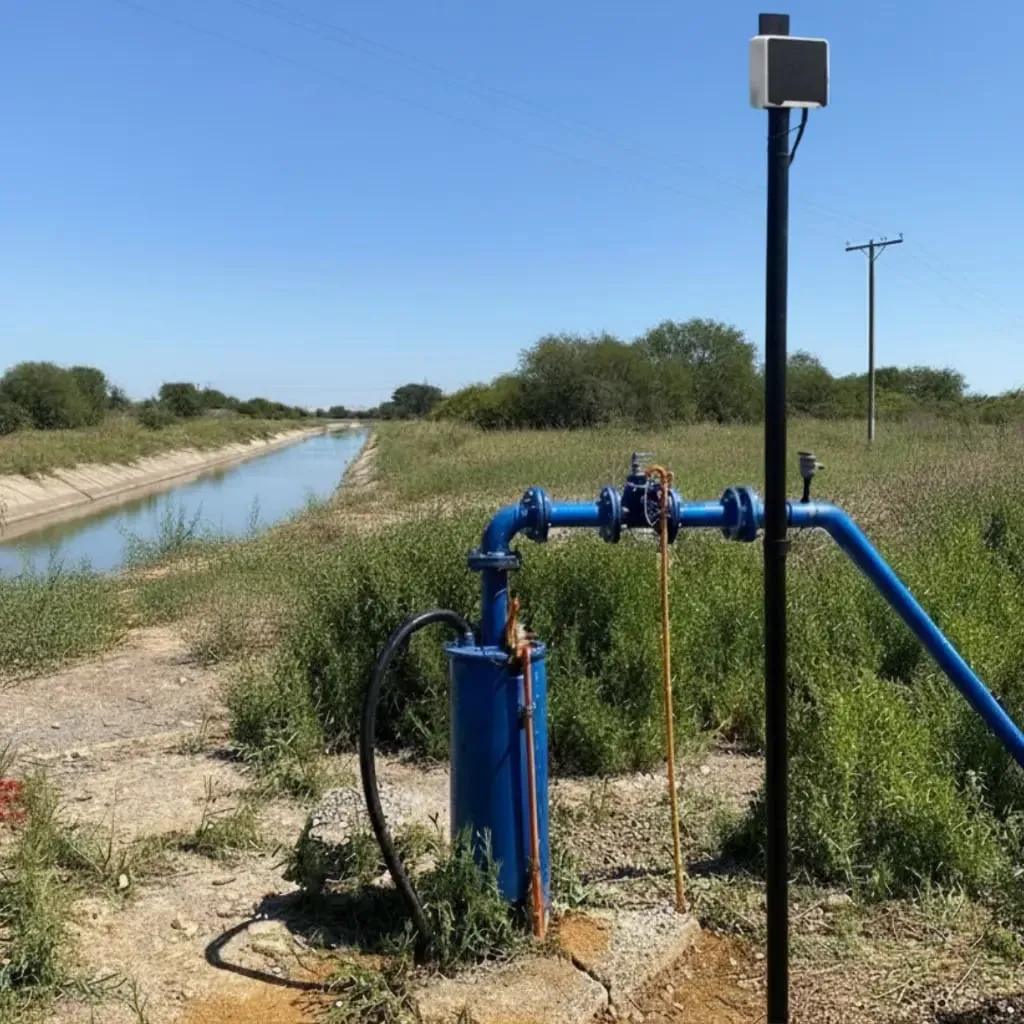
If you hold groundwater use rights in Chile, the General Water Directorate (DGA) can order you to measure what you extract and send the data to its Effective Extraction Monitoring (MEE) software. This is what the rules require, according to the DGA’s own documents.
The legal basis
Law 21.064 of 2018 amended articles 67 and 68 of Chile’s Water Code. After the reform introduced by Law 21.435 of 2022, article 67 requires holders of rights granted in prohibition zones and restriction areas to measure flows and volumes, monitor groundwater levels and transmit that information. Article 68 allows the DGA to require these systems and to set, by reasoned resolution, their deadlines and technical conditions.
For groundwater, that rule is DGA (Exempt) Resolution No. 1238 of 2019, published in the Official Gazette on July 1 of that year. Resolution No. 564 of 2020 rectified it, including its frequency table, and Resolution No. 1608 of 2023 extended the deadlines for the two smallest standards.
Four standards based on flow
The standard depends on the total flow of the rights exercised at the well. It is assigned by a regional DGA resolution, which also sets the flow ranges, so there is no single national threshold. This is the table in force after the 2020 rectification:
| Standard | Measurement system | Measurement | Transmission | Maximum lag |
|---|---|---|---|---|
| Major (Mayor) | General | Hourly | Online, one submission per measurement | 7 days |
| Medium (Medio) | General | Daily | Excel file, at least every 15 days | 15 days |
| Minor (Menor) | Basic | Monthly | Form, at least once a month | 1 month |
| Very small flows | Flowmeter only | Twice a year | Form, at least once a year | 1 month |
The General system combines a flowmeter, a groundwater level sensor and a data logger that backs up at least three years of data. The Basic system uses the same flowmeter plus a level meter that may be portable. For very small flows, the flowmeter alone is enough.
The flowmeter must have a maximum error of 5%, cover at least 20% to 120% of the authorized flow and sit no more than 200 meters from the well, with no bypass and never on the pump’s suction side.
Three ways to transmit
By form, typing the data into the MEE software; by file, uploading an Excel sheet in the DGA’s format; or online, from a Control Center that sends the data to the DGA through a web service.
What a Control Center is
Resolution 1238 defines it as the place where data measured at one or more wells is collected. It can belong to the water users’ organization, to the holder or to a third party, and it must back up at least three years of data.
Exempt Resolution No. 2170 of 2025 approved Technical Manual No. 1/2025 for online transmission. Under it, holders may only use Control Centers registered with the DGA, each submission includes the Control Center’s tax ID (RUT), and data should be transmitted within one hour of the measurement.
The DGA publishes a list of registered Control Centers, but it states that it does not certify the service quality of those centers, has no ties with them, and that hiring one does not ensure regulatory compliance. It also states that it does not accredit suppliers or certify installers. Making sure the data actually reaches the MEE database is the holder’s responsibility, through its Control Center.
Deadlines
They run from the publication of the regional resolution in the Official Gazette:
- Major: 4 months to install measurement and register the well; 5 to start transmitting.
- Medium: 10 and 12 months.
- Minor and very small flows: 60 and 72 months, since the 2023 amendment.
Practical steps
- Check whether a regional resolution covers your area (the DGA publishes a standard lookup tool by municipality) and add up the flows of the rights exercised at the well.
- Appoint the reporting party, yourself or an authorized third party, who logs in with Chile’s Clave Única. Responsibility stays with the holder.
- Register the well in the MEE. You will receive a well code (Código de Obra) and a QR code that must be visible at the well.
- Install the system your standard requires and keep the document that proves the flowmeter’s error.
- If you transmit online, choose a Control Center from the DGA list and check that your data reaches the MEE.
- If something fails, report it through the DGA’s ticket system within 3 calendar days. Non-compliance exposes the holder to the fines in article 173 of the Water Code.
Where BWhale fits
Sistemas Tecnológicos OSystems SpA, BWhale’s Chilean company, appears on the DGA’s list of registered Control Centers. Our Well Node measures level, flow and pressure every minute and reports to the MEE every hour. The platform shows the history of reports sent to the DGA, so you can confirm that every reading reached the MEE.
Sources
All documents are in Spanish.
- DGA: MEE portal
- DGA: Exempt Resolution No. 1238 of 2019
- DGA: Exempt Resolution No. 564 of 2020
- DGA: Exempt Resolution No. 1608 of 2023
- DGA: regional implementation of the MEE
- DGA: MEE frequently asked questions (PDF)
- DGA: MEE leaflet (PDF)
- DGA: transmission formats and Control Centers
- DGA: Exempt Resolution No. 2170 of 2025 and Technical Manual No. 1/2025 (PDF)
- DGA: registered Control Centers, 24-04-2026 (PDF)
- BCN: Law 21.064