RFID cargo auditing: how to validate trucks and pallets
How a RAIN RFID checkpoint verifies that pallets and trucks carry what was planned, which errors it helps prevent and what a company needs to implement it.
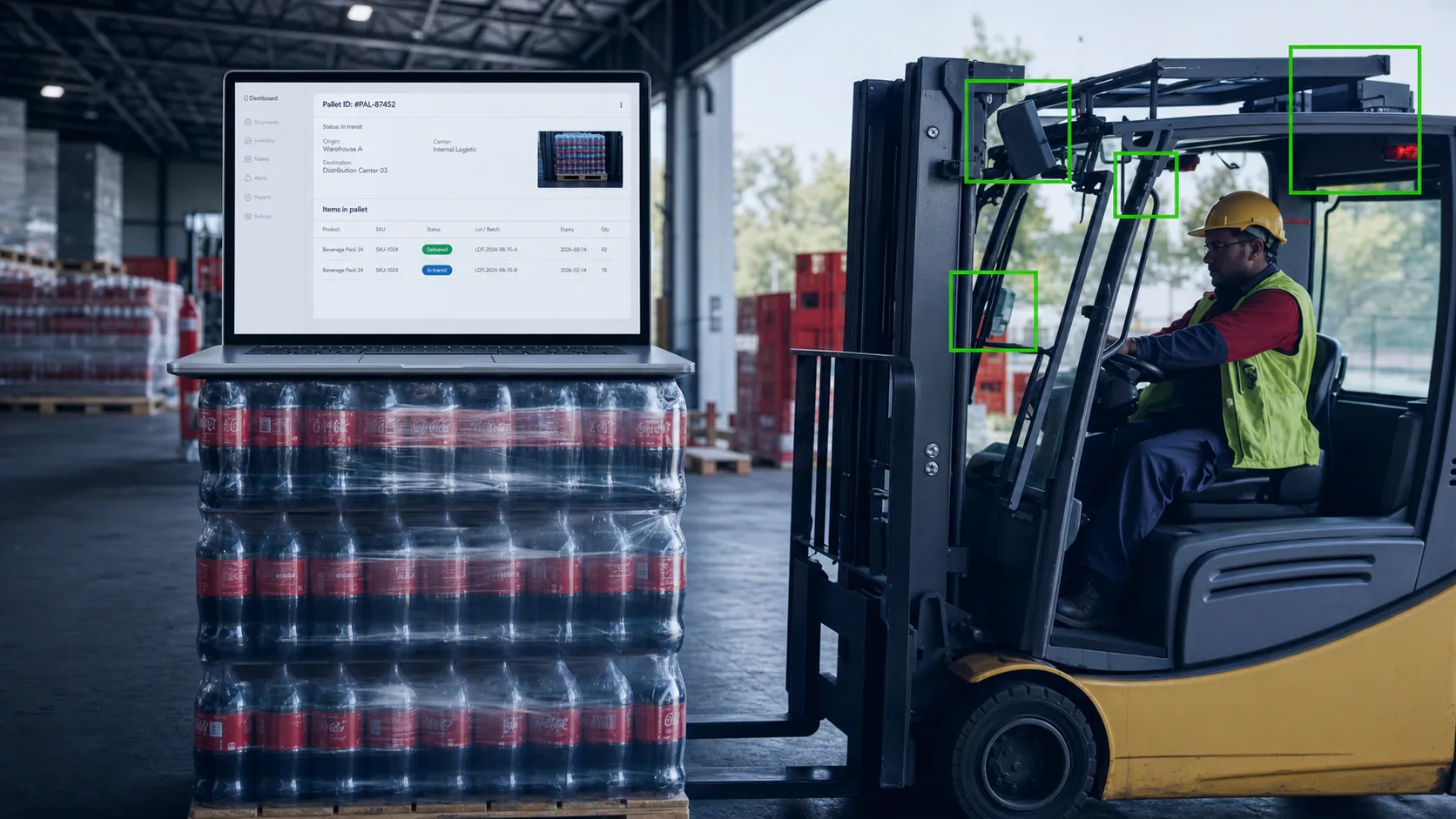
How do you know, before a truck leaves the dock, that it carries exactly what was planned? One way is to count by hand. Another is RFID auditing: every unit identifies itself as it passes a checkpoint, and the system compares what it read with what was expected. This article explains how it works and what it takes to implement.
What RAIN (UHF) RFID is
RAIN is the industry name for passive ultra-high-frequency (UHF) RFID based on the ISO/IEC 18000-63 protocol, also known as GS1 UHF Gen2. GS1’s Gen2 standard describes a system of readers and tags operating between 860 and 930 MHz in which tags are passive: they receive all of their operating energy from the reader’s radio signal.
According to the RAIN Alliance, these tags need no battery and can be read at short or long range (up to 10 meters) without line of sight, through most materials such as cartons or wood. Most of them store a simple identifier, usually 96 or 128 bits long.
There are limits too. GS1 notes that liquids absorb electromagnetic waves, reducing the energy a tag receives, and that tags designed specifically for metal surfaces exist. That is why tag type and placement should be validated with the real load.
How an audit checkpoint works
An audit checkpoint combines four elements:
- A tag at origin. Each pallet receives a RAIN tag linked to its shipment. For logistic units, GS1 defines the SSCC, an 18-digit code that can be encoded in an EPC/RFID tag.
- A read at the checkpoint. Readers and antennas installed at the dock, the bay or the exit gate read the tags as the pallet or truck goes by, without lining up each label with a scanner.
- A comparison with the plan. The system checks what it read against the expected load, which comes from the WMS or ERP, and flags missing units, extra units or units that do not belong to that shipment.
- Weight and visual evidence. The read shows which tagged units went through. Weight helps detect physical differences the tag cannot see, and an image records the condition of the load.
Each check should be logged with date, time and place so it can be audited later.
Problems it helps prevent
- Pallets loaded onto the wrong truck or at the wrong dock.
- Missing or extra units compared with the plan.
- Content differences that a read alone cannot detect, when combined with weight.
- Disputes without evidence: the record of read, weight and image documents what left and what arrived.
What a company needs to implement it
- A tagging strategy: what gets tagged (pallet, case or returnable asset), with which identifier, where the tag goes and which tag type each product needs, especially with liquids or metal.
- Reader and antenna placement: define each checkpoint and its read zone, so it records what passes through that point and not what is waiting at the next dock.
- WMS/ERP integration: the planned load must come from the system of record, and each audit result must flow back to it.
- Tag issuing: someone must print, encode and control tags at origin.
- A pilot: start with one bounded flow, measure with your own data and adjust before scaling.
Sequence matters. If a tag is poorly applied at origin, no reader will fix it later; and if the load plan is not available online, the checkpoint has nothing to compare against.
How BWhale approaches it
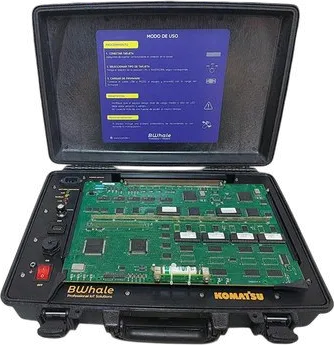
BWhale addresses this problem with its own products. Pallet Audit System audits pallets through weight, RFID reading and visual evidence at receiving and dispatch. Truck Audit System performs RFID audits at checkpoints to validate that a truck’s cargo matches the plan. And Wriot RMS prints and manages the RFID labels.
BWhale also ran an RFID pilot in Coca-Cola Andina’s cargo control and validation operations. It covered tag application, bay control, weight validation and a final audit at the dock; the flow can be seen in this video (in Spanish).