
The strategic value of a technology partner
Why a hybrid technology strategy reduces risk, accelerates innovation, and turns IoT and AI initiatives into real business outcomes.
By BWhale
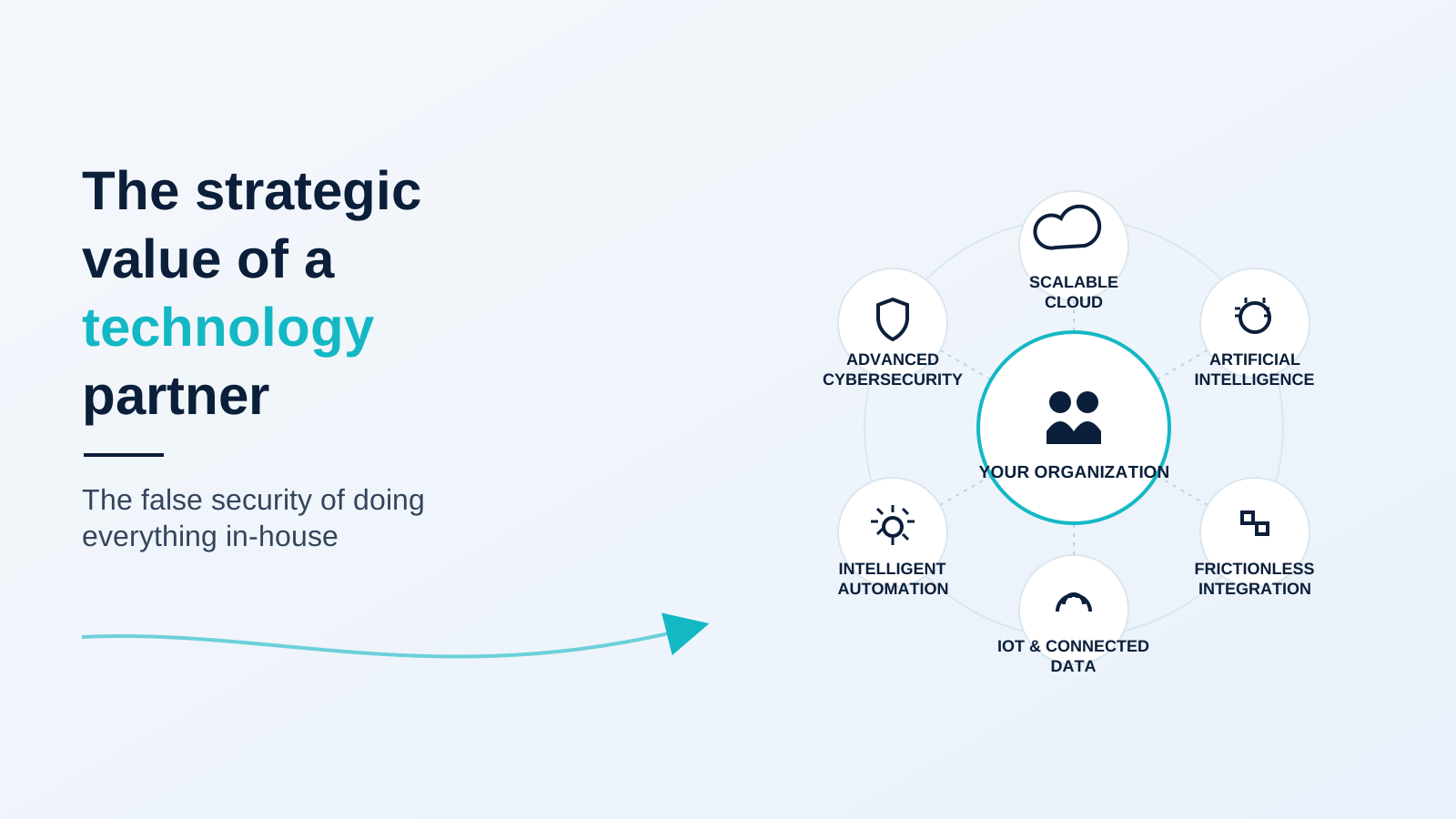
The false security of doing everything in-house
For years, many organizations have equated in-house technology development with control, security, and independence. Yet having developers or specialists on payroll does not, by itself, guarantee sustainable technology capability.
The risk appears when knowledge of a critical application, integration, or process becomes concentrated in a handful of people. If one of those people leaves, the organization can lose context, continuity, documentation, and response speed. The dependency was never eliminated — it was simply left unmanaged.
The strategic decision, then, is not an absolute choice between an internal team or an external one. It is about determining which capabilities should stay under the company’s direct control, and which ones are better accelerated through a specialized technology partner.
The challenge isn’t hiring people — it’s building capabilities
Digital transformation requires combining strategy, business knowledge, experience design, architecture, development, data, infrastructure, cybersecurity, quality control, deployment, support, and continuous improvement.
Assembling and maintaining all of those competencies in-house can be slow, costly, and hard to scale — especially when technology isn’t the organization’s core business.
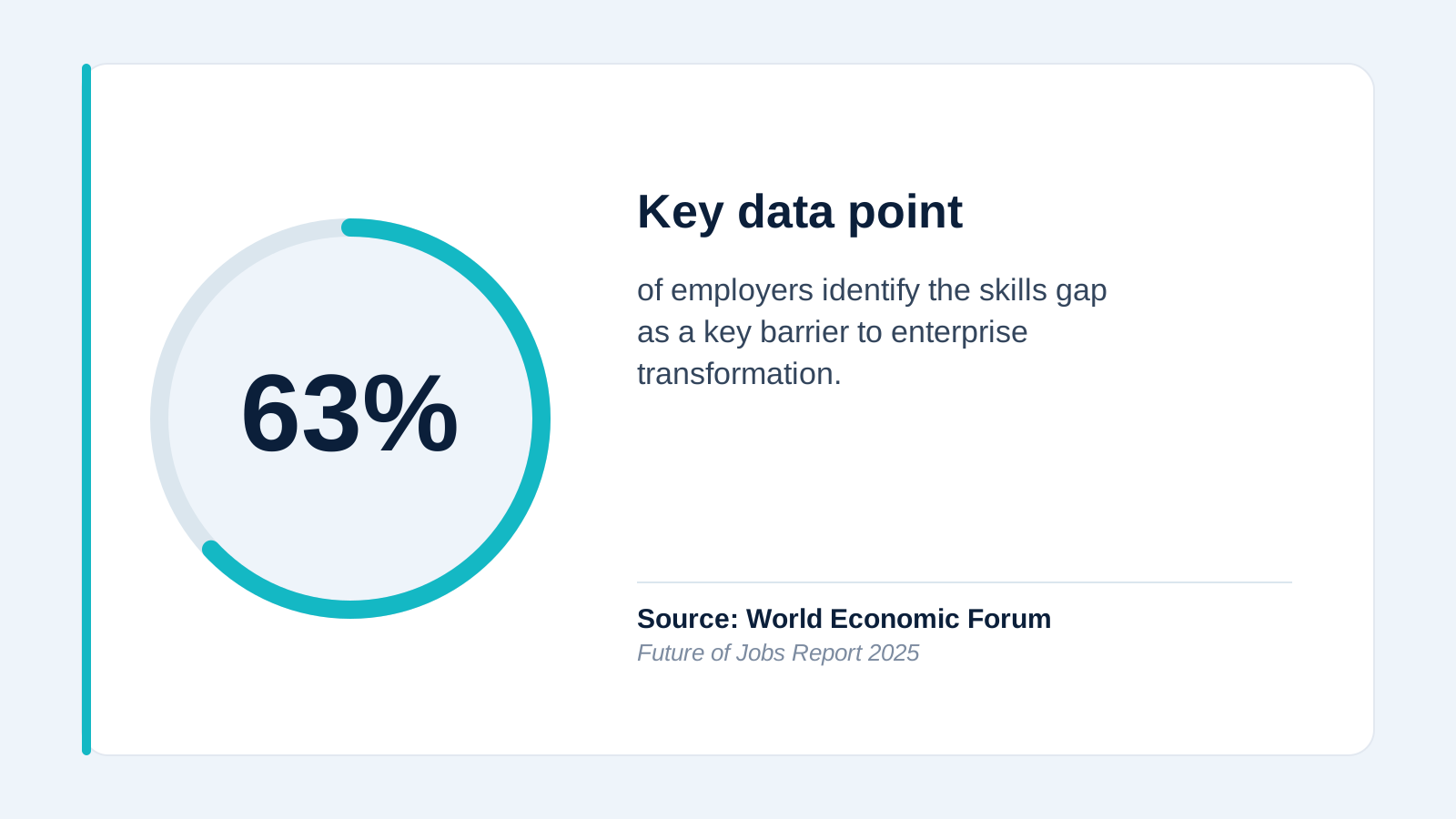
The World Economic Forum’s Future of Jobs Report 2025 identifies skills gaps as the leading barrier to enterprise transformation: 63% of surveyed employers consider it a significant obstacle for the 2025–2030 period.1
This context helps explain why a company can have budget and the will to innovate, yet still lack the combination of capabilities required to execute consistently.
Having an in-house team doesn’t eliminate dependency
The fear of “depending on third parties” is reasonable, but it often overlooks another form of exposure: depending on one or two key people inside the organization.
In a loosely formalized in-house setup, there may be no service-level agreements, no prepared backups, no escalation paths, no after-hours coverage, no structured knowledge transfer, and no verifiable continuity commitments.
A professional relationship with a partner can build in exactly those mechanisms: SLAs, documentation, incident management, specialist backup, traceability, security, defined intellectual property, and transition plans.
Research published in MIS Quarterly found that well-structured SLAs can complement relational governance and strengthen trust, commitment, and conflict resolution in IT outsourcing relationships.2
Outsourcing, then, doesn’t necessarily mean losing control. With good governance, it can turn an informal dependency into a measurable, documented, and manageable capability.
Digital transformation keeps failing more than expected
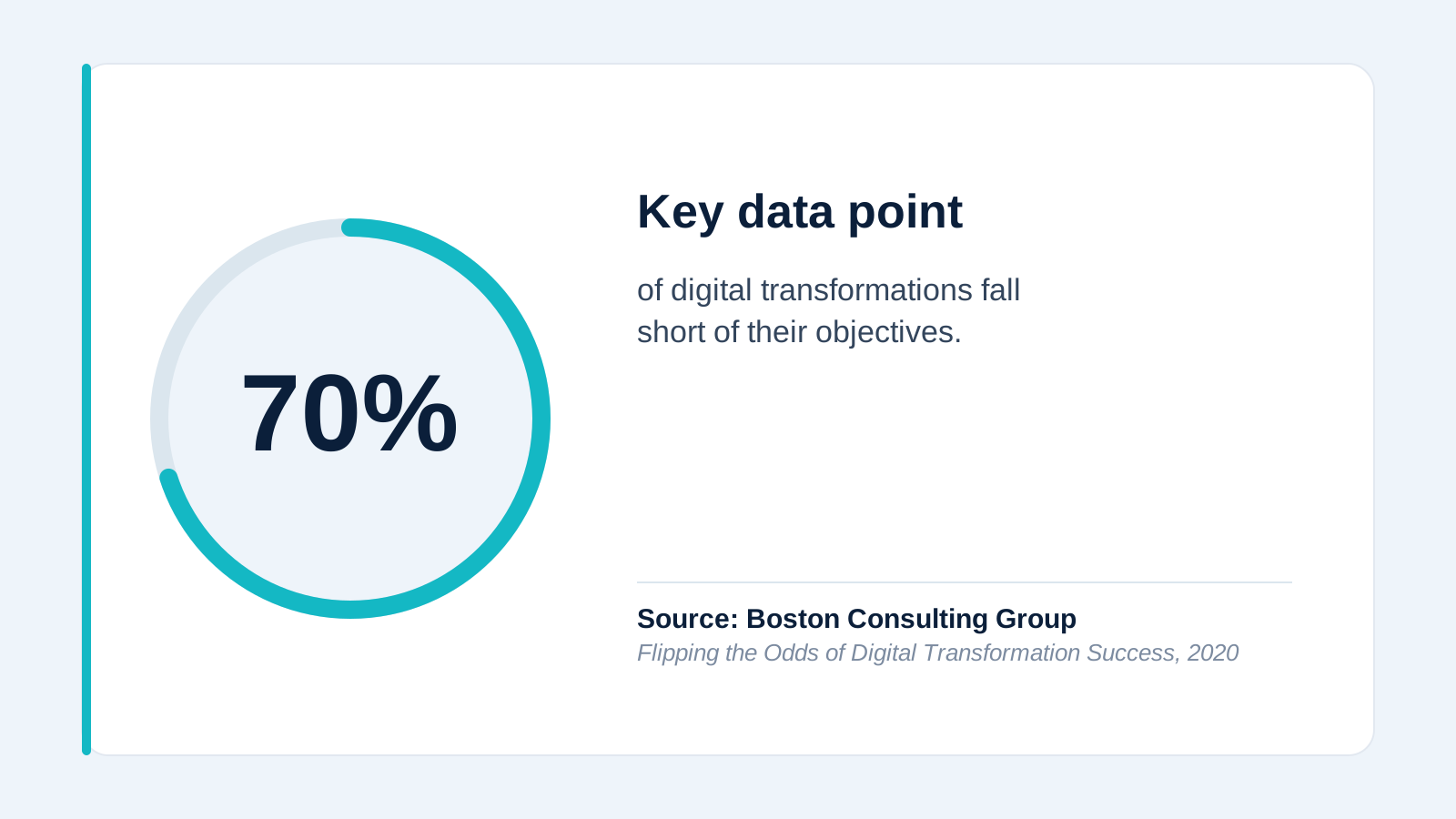
Technology alone doesn’t guarantee results. Boston Consulting Group has reported that roughly 70% of digital transformations fall short of their objectives.3
The factors associated with better performance include a clear strategy, committed leadership, the right talent, agile ways of working, effective monitoring, and a technology architecture built to scale.3
This shifts the focus of the debate. The challenge isn’t just building an application or buying a platform. It’s understanding the process, integrating the solution with the existing ecosystem, managing adoption, operating with continuity, and demonstrating impact.
An experienced partner can bring capabilities an organization needs critically, though not necessarily permanently: architecture, DevOps, integration, IoT, artificial intelligence, data, cybersecurity, or digital product design.
The value of accumulated knowledge
A technology partner doesn’t just bring hours of work. It brings design patterns, lessons learned, methodologies, accelerators, and experience gathered across multiple implementations.
An empirical study published in MIS Quarterly found that IT outsourcing can produce productivity gains, and that knowledge accumulated by providers plays a meaningful role in those results.4
Another study from the Journal of Management Information Systems, based on 74 outsourcing relationships, identified partnership quality as an important predictor of success. Participation, communication, information sharing, and top-management support all emerged as positive factors.5
The evidence doesn’t show that any external provider is better than an internal team. It shows something more useful for decision-making: a quality alliance can generate value when it combines specialization, shared goals, effective communication, and clear governance.
The market is evolving in the same direction. A 2023 study published in MIS Quarterly describes the shift from transactional, cost-driven relationships toward providers positioning themselves as business partners capable of contributing to innovation and solving business problems.6
Artificial intelligence raises the cost of improvising
The pressure to implement artificial intelligence is pushing many companies to launch proofs of concept before properly defining the problem, assessing their data, or preparing the necessary architecture.
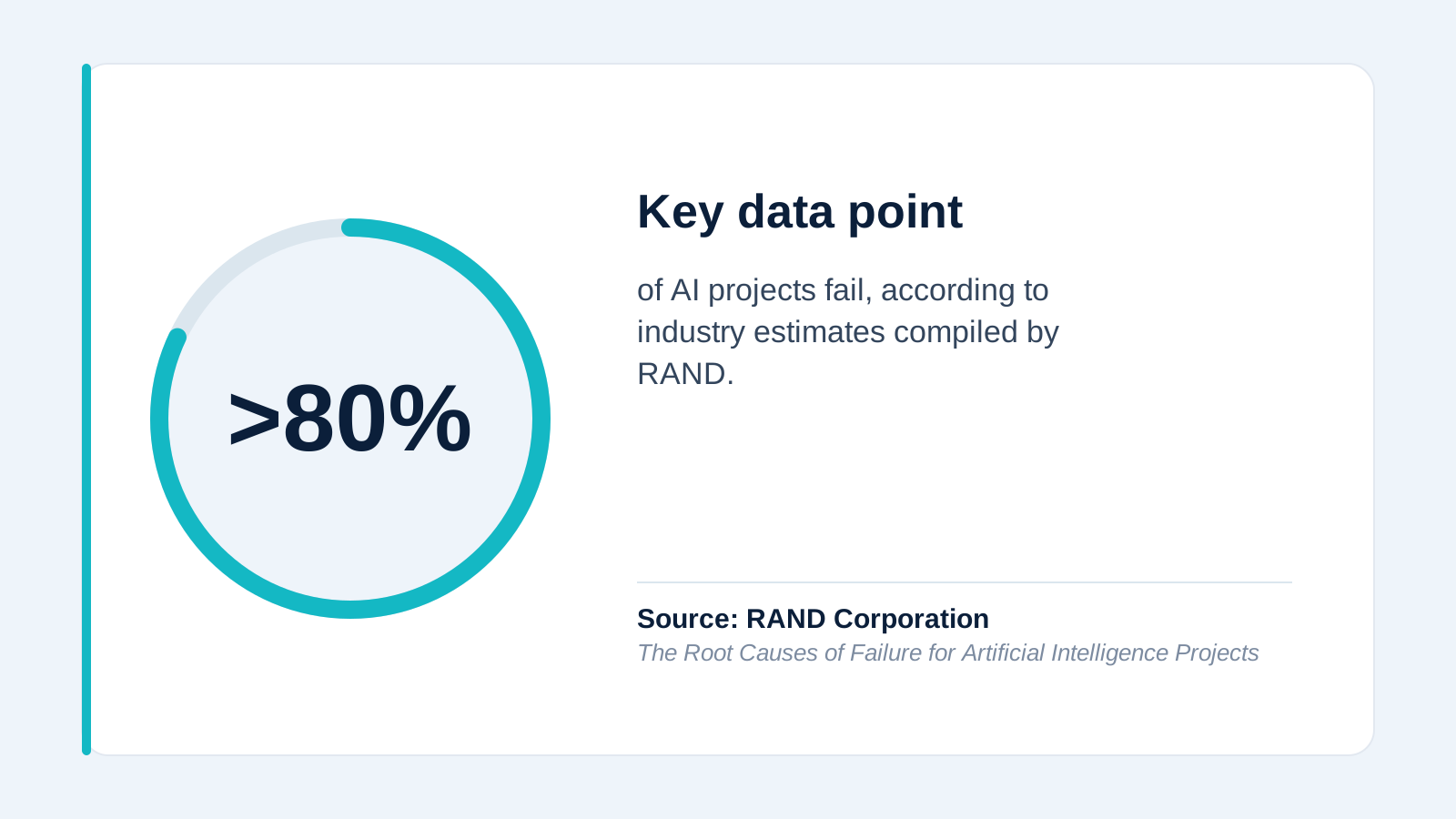
RAND Corporation notes that, according to estimates compiled in its research, more than 80% of AI projects fail. The main causes cited include poorly defined problems, inadequate data, insufficient infrastructure, unrealistic expectations, and an excessive focus on technology over operational value.7
This doesn’t mean companies should avoid AI. It means they need to approach it with more discipline.
Capturing real value requires strategy, data engineering, architecture, integration, security, observability, cost control, and deep knowledge of the process being improved. Rarely do all of those competencies live within a single hire or a small, newly formed team.
The right model is hybrid
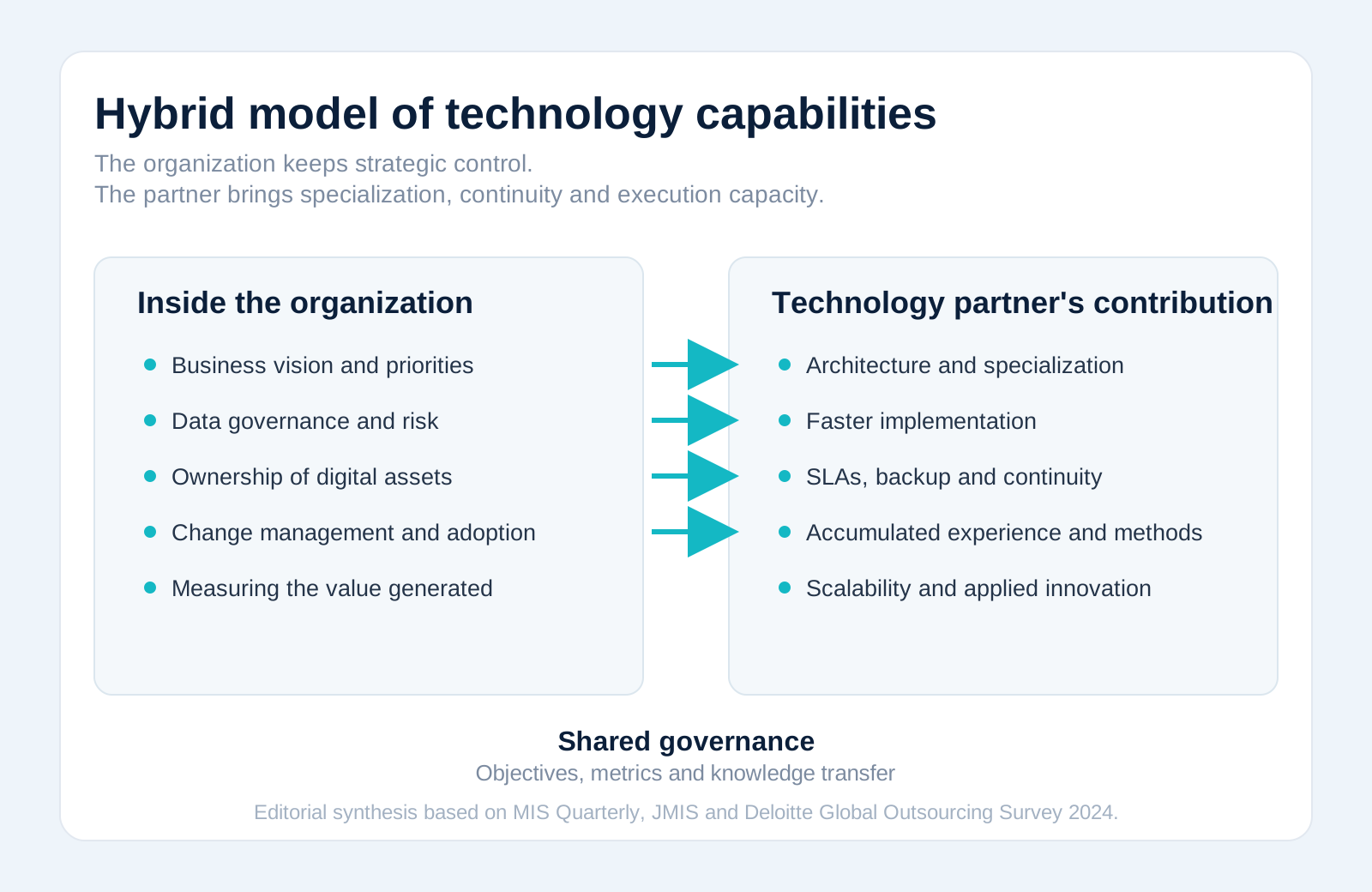
Working with a partner doesn’t mean outsourcing all of your technology. The company must retain internally its business knowledge, priority-setting, data governance, risk management, ownership of its digital assets, and accountability for results.
The partner complements those capabilities by contributing specialization, speed, continuity, cross-cutting experience, and execution capacity.
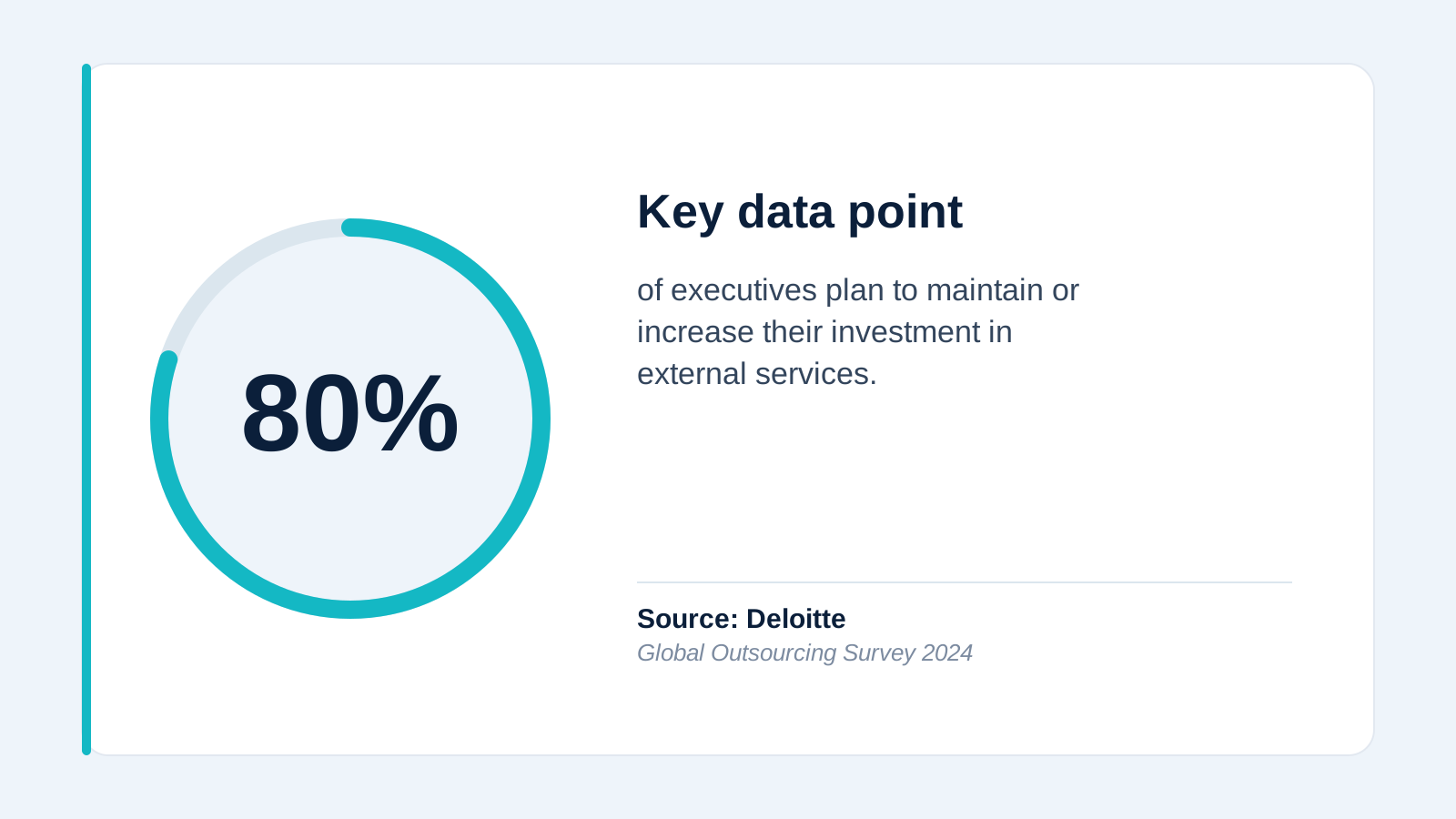
Deloitte’s 2024 global outsourcing survey reinforces this trend: 80% of surveyed executives planned to maintain or increase their investment in third-party services. Access to specialized talent and agility join cost optimization as key drivers of these decisions.8
Competitive advantage doesn’t necessarily depend on having every specialist on staff. It depends on being able to access the right capabilities at the right time, and managing them through objectives, metrics, responsibilities, and continuity mechanisms.
From technology initiative to operational outcome
Organizations don’t need to become software factories to advance digitalization, automation, IoT, or artificial intelligence. They need to govern technology strategically and work with teams capable of turning opportunities into viable, secure, and scalable solutions.
At BWhale, we see technology as a lever for innovation, continuous improvement, and operational excellence. Our approach combines problem discovery, architecture design, development, integration, deployment, and ongoing evolution.
The goal isn’t to create a new dependency. It’s to build sustainable digital capabilities that are documented and aligned with concrete business indicators.
If your organization is evaluating an innovation, digitalization, IoT, artificial intelligence, or operational improvement project, expert advice at the outset can avoid cost overruns, reduce risk, and accelerate value creation. At BWhale, we can help you assess the opportunity, define a roadmap, and execute with the experience these challenges require.
Methodological note
This article does not claim that outsourcing is always superior to building internal capabilities. The evidence reviewed supports a contingent, hybrid approach: keep strategic capabilities inside the organization and complement execution with specialized partners, under clear governance.
The figures cited correspond to the definitions and samples used by each source. In particular, RAND’s figure on AI project failure is presented as an estimate cited by the report, not as a universal rate calculated directly by RAND.
Sources
Footnotes
-
World Economic Forum. The Future of Jobs Report 2025, “Barriers to transformation” section. https://www.weforum.org/publications/the-future-of-jobs-report-2025/in-full/4-workforce-strategies/ ↩
-
Goo, J., Kishore, R., Rao, H. R. and Nam, K. “The Role of Service Level Agreements in Relational Management of Information Technology Outsourcing: An Empirical Study”. MIS Quarterly, 33(1), 119–145, 2009. https://misq.umn.edu/misq/article/33/1/119/223/The-Role-of-Service-Level-Agreements-in-Relational ↩
-
Boston Consulting Group. Flipping the Odds of Digital Transformation Success, 2020. https://www.bcg.com/publications/2020/increasing-odds-of-success-in-digital-transformation ↩ ↩2
-
Chang, Y. B. and Gurbaxani, V. “Information Technology Outsourcing, Knowledge Transfer, and Firm Productivity: An Empirical Analysis”. MIS Quarterly, 36(4), 1043–1063, 2012. https://misq.umn.edu/misq/article/36/4/1043/1482/Information-Technology-Outsourcing-Knowledge ↩
-
Lee, J.-N. and Kim, Y.-G. “Effect of Partnership Quality on IS Outsourcing Success: Conceptual Framework and Empirical Validation”. Journal of Management Information Systems, 15(4), 29–61, 1999. https://www.jmis-web.org/articles/462 ↩
-
Kotlarsky, J., Rivard, S. and Oshri, I. “Building a Reputation as a Business Partner in Information Technology Outsourcing”. MIS Quarterly, 47(2), 901–922, 2023. https://misq.umn.edu/misq/article/47/2/901/2216/Building-a-Reputation-as-a-Business-Partner-in ↩
-
Ryseff, J., De Bruhl, B. and Newberry, S. The Root Causes of Failure for Artificial Intelligence Projects and How They Can Succeed. RAND Corporation, 2024. https://www.rand.org/pubs/research_reports/RRA2680-1.html ↩
-
Deloitte. Global Outsourcing Survey 2024. https://www.deloitte.com/global/en/issues/work/global-outsourcing-survey.html ↩